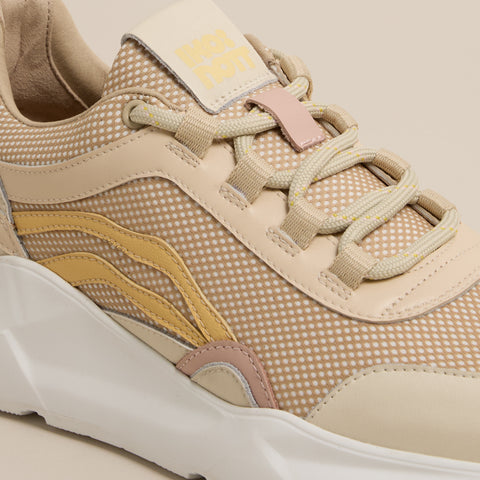
You put on your new sneakers... and after a few steps, pain appears at the back of your foot.
Friction, blisters, Achilles tendon irritation... the heel is often the first area to suffer.
Rest assured: heel pain with new shoes is not uncommon, and above all, it's not inevitable.
Here's why it happens, and how to fix it.
🔎 Why do your sneakers hurt your heels?
Heel pain with shoes can have several causes.
1️⃣ A heel counter that's too stiff
The heel counter is the rigid back part of the shoe that holds the heel.
If it's too hard or poorly positioned, it puts excessive pressure on the back of the foot, causing irritation and blisters.
This is particularly common with new sneakers, whose materials have not yet been softened.
2️⃣ Repeated friction
If your foot slips slightly in the shoe, friction occurs with each step.
Result: redness, chafing, and sometimes painful blisters.
This can be due to:
-
a slightly too large size
-
socks that are too thin
-
poor heel support
3️⃣ Too quick an adaptation
Walking for a long time on the first day with a new pair is the most common mistake.
Even a comfortable sneaker needs to be "broken in" gradually.
Leather, canvas, or technical materials need a few wears to adapt to the shape of your foot.
4️⃣ Pressure on the Achilles tendon
If the shoe is too high at the back or poorly padded, it can irritate the Achilles tendon.
This area is sensitive and can quickly become painful if pressure is repeated.
How to quickly relieve heel pain?
If the pain is already there, here are simple and effective solutions:
-
Apply a bandage or hydrocolloid patch to the sensitive area
-
Use an anti-friction cream before putting on your sneakers
-
Wear slightly thicker socks at first
-
Alternate with another pair for a few days
For leather shoes, you can also soften the back:
Gently heat the area with a hairdryer on low heat, then wear the pair with thick socks to help the material relax.
How to prevent heel pain from returning?
Prevention is essential.
✔️ Gradually break in your new sneakers
✔️ Check that the size is appropriate (neither too large nor too tight)
✔️ Choose models with a padded heel collar
✔️ Avoid long walks on the first few days
Good heel support significantly reduces friction.
Why heel comfort is essential
The heel absorbs a large part of the shock during walking.
If it is poorly supported or compressed, it can alter your posture and cause wider pains (ankles, knees, back).
A well-designed sneaker should:
-
offer soft reinforcement at the back
-
avoid friction zones
-
support the foot without excessive rigidity
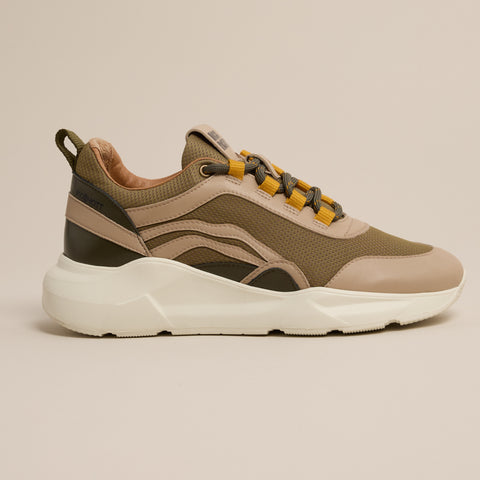
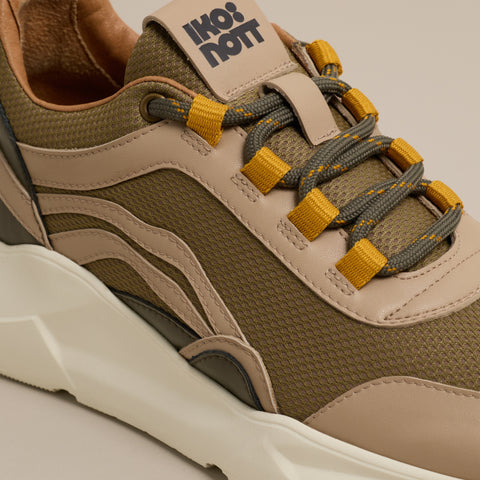
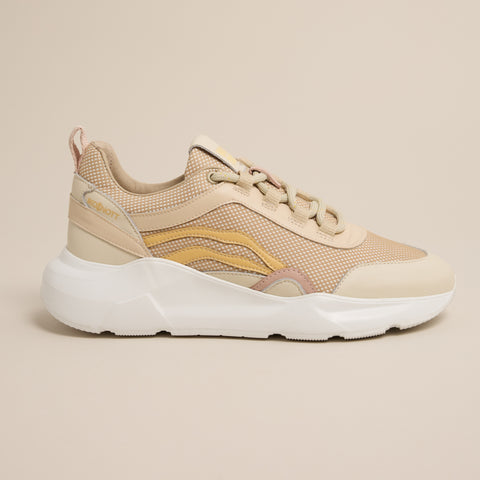
👟 What about IKO:NOTT?
We know that heel comfort is crucial.
That's why our sneakers:
-
feature a soft back collar with anti-friction reinforcement
-
integrate a memory foam sole to absorb shock
-
use flexible materials that gradually adapt to the foot
The goal is not to "break in" the shoe... but for it to adapt naturally to you.
👉 Discover our models designed for heel comfort
✅ In summary
Heel pain with new sneakers is common, but avoidable.
With a little gradual adaptation, good support, and well-designed materials, your sneakers can become your best allies, not your worst memory.