In summer, feet swell. It's common, it's frequent, and yet nobody really talks about it. Here's what's happening in your body, and what you can do about it.
Your feet are swelling. It's not in your head.
It starts at the end of the day. A shoe that seemed well-fitted in the morning feels a little tight in the evening. A heavier, more tense foot. A mark left by the sock. Not painful, but uncomfortable. Enough to notice.
It's not fatigue. It's physics.
What really happens when it's hot
When the temperature rises, the body reacts to regulate its temperature: it widens blood vessels to allow more blood to circulate closer to the skin's surface. This is called vasodilation. A natural and useful mechanism, but not without consequences.
Result: blood return to the heart slows down. Fluids accumulate in the lower body. And gravity does the rest: feet and ankles swell first.
Add to this water retention, which is naturally higher in hot weather. And if the day has been long, you've moved little, or you've walked on burning asphalt, the phenomenon intensifies.
The foot volume can increase by several percent over a hot day. This is not insignificant: a shoe fitted in the morning can compress in the evening.
It's not a question of weakness. It's a question of physiology.
How to reduce foot swelling in summer
Here are some simple steps that can help during hot weather.
1. Walk (even a little)
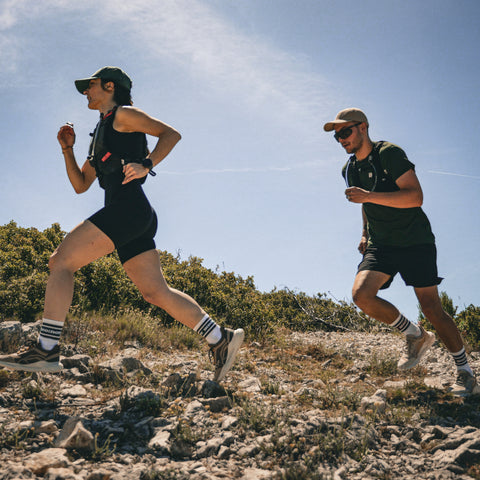
Walking activates venous circulation. Calf muscles act like a pump and help blood return to the heart. Remaining seated or standing for long periods without moving provides all the conditions for swelling to set in.
Even a few minutes of walking every hour can make a difference.
2. Elevate your legs at the end of the day
Lying down with legs slightly elevated (a pillow is enough): gravity works in the opposite direction. Accumulated fluid in the feet naturally drains. Fifteen minutes makes all the difference.
3. Drink regularly
It's counter-intuitive, but real: the less you drink, the more your body retains water in compensation. It is therefore better to drink regularly throughout the day, and a little more when it's hot. Also remember to limit alcohol, which remains the main factor of dehydration.
4. End the day with a gentle massage
From the foot upwards towards the leg, never the other way. The goal is to stimulate circulation and promote venous return. A simple, effective, and rather pleasant gesture.
5. Opt for cold water on the feet
No need for an ice bath. A stream of cool water on the feet and ankles is enough to cause local vasoconstriction: the vessels constrict, so the swelling decreases.
And what about your shoes?
A shoe that's too rigid, too tight, or made of waterproof synthetic materials is the enemy in hot weather.
Swollen feet need space, materials that adapt without compressing, and a sole that doesn't reflect the heat from the asphalt back to the foot.
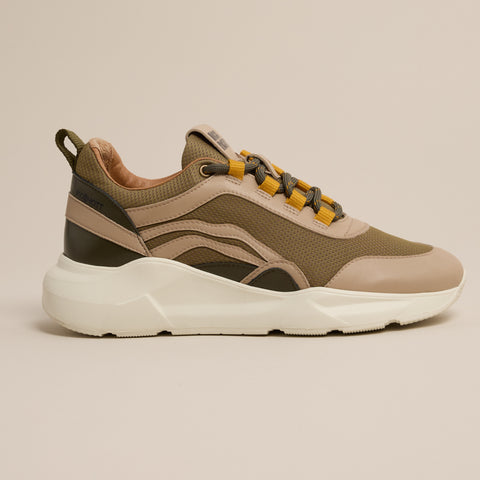
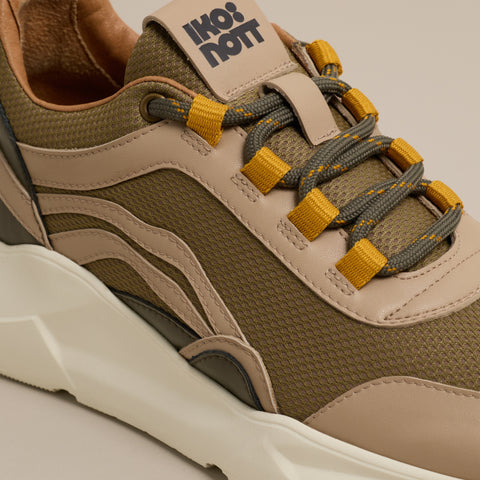
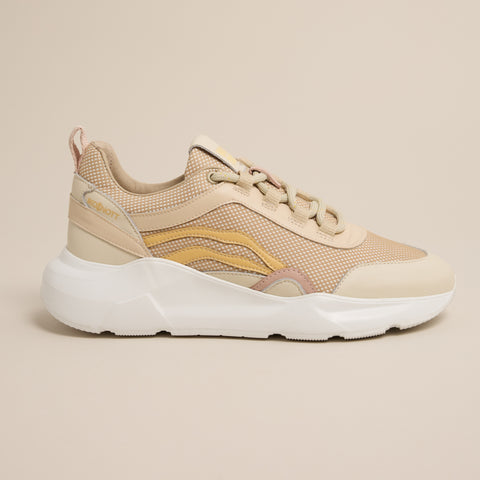
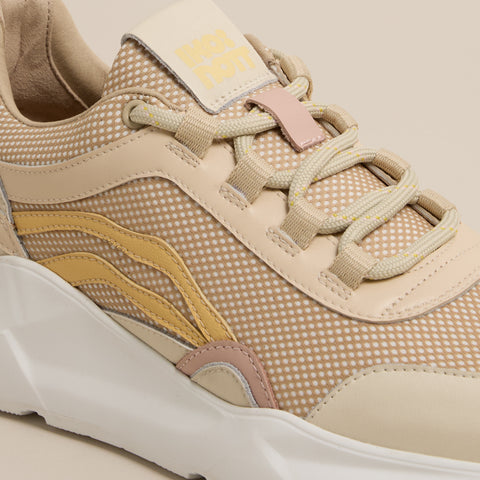
At IKO:NOTT, the memory foam insole (developed with a podiatrist) conforms to the foot's morphology and supports movement without restricting it. The recycled leather of our sneakers allows air to circulate while protecting against splashes. And on the Phénix, the 75% ULVA algae outsole remains light and flexible even on overheated surfaces.
It's not a miracle cure for swelling, just shoes that don't aggravate it.
👉 Discover the IKO:NOTT collection
When to worry?
Heat-related swelling is benign in the vast majority of cases. It appears at the end of the day and subsides with rest.
But some signs should raise a red flag: sudden and asymmetrical swelling (only one foot), painful, accompanied by redness, local heat, or fever. Or swelling that doesn't disappear after a night's rest.
In this case, consult a doctor.
❓FAQ: Swollen feet in summer
Why do my feet swell when it's hot?
Due to heat, the body dilates blood vessels to release heat (vasodilation). Blood return to the heart slows down, fluids accumulate in the lower body and, due to gravity, feet and ankles swell. This is a normal phenomenon, which intensifies at the end of the day. 😉
How to quickly reduce foot swelling?
Elevate your legs for about fifteen minutes, run cool water over your feet and ankles to constrict the vessels, walk for a few minutes to restart circulation, and finish with a gentle massage from the foot towards the calf. These actions usually provide relief within tens of minutes.
Does drinking water help reduce swelling?
Yes. Counter-intuitively, the less you drink, the more your body retains water. Drinking regularly throughout the day helps limit retention. Also remember to moderate alcohol, which promotes dehydration.
When should you consult a doctor for swollen feet?
Consult a doctor if the swelling is sudden, affects only one foot, is painful, or is accompanied by redness, local heat, or fever. Also, if it does not disappear after a night's rest. These signs are not simply due to heat.